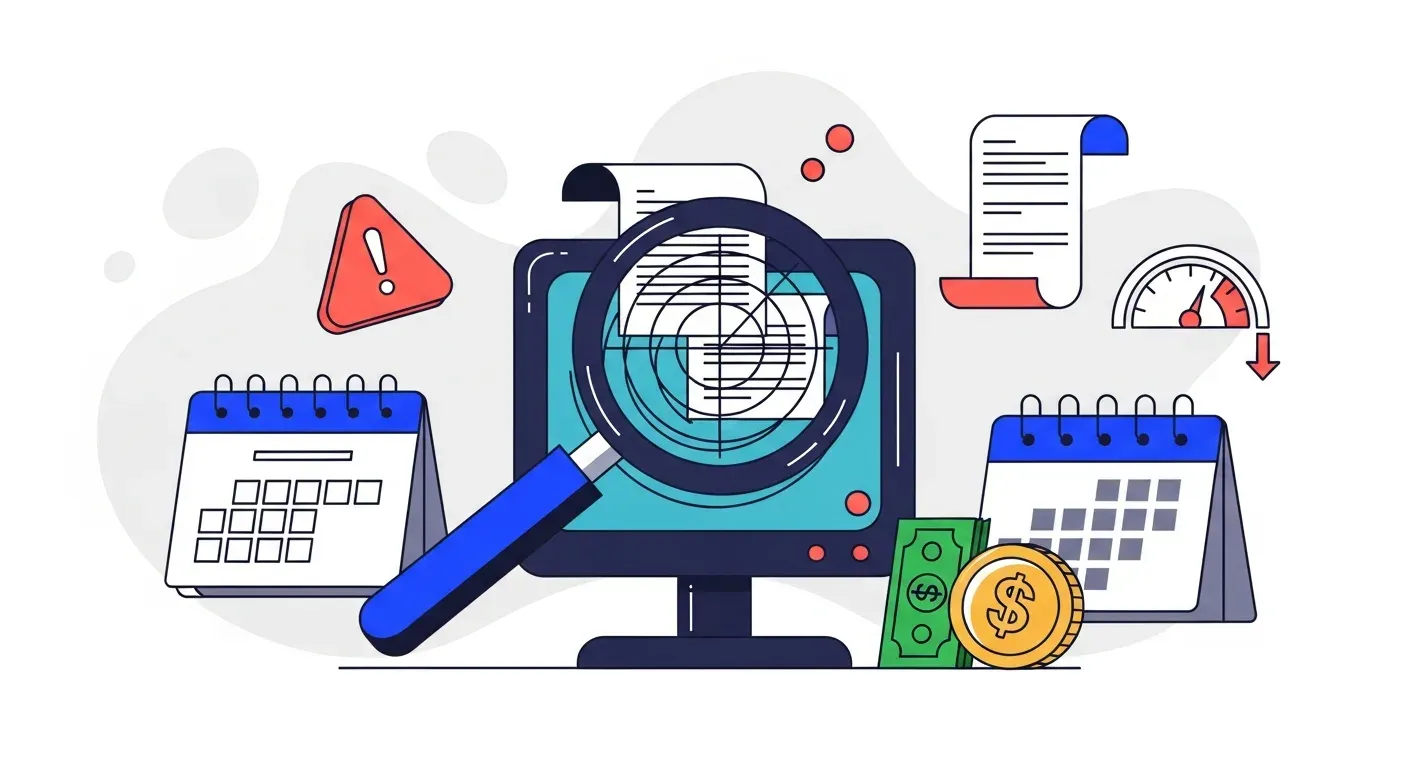



Manual AR processes in manufacturing, distribution, and construction create four critical failure points: dispute delays that freeze cash, payment chain reactions that stall operations, slow recovery during disruptions, and blind spots that cripple forecasting. Companies still running manual AR are one disruption away from a cash flow crisis.
If you run a manufacturing plant, distribution business, or construction company, your accounts receivable process is not just a back-office function. It is load-bearing infrastructure. And if it is still manual, it is infrastructure with cracks running through it.
Freight rates are climbing. Customer payment patterns have shifted. Supply chain disruptions have gone from rare events to routine occurrences. In this environment, manual AR does not just slow you down. It creates operational vulnerabilities that can freeze your entire cash flow when you can least afford it.
35% of mid-sized firms still rely on fully manual AR processes. 41% of CFOs identify payment delays as their top source of business disruption. Those two numbers together paint a clear picture: the businesses most exposed to cash flow risk are often the ones least equipped to handle it.
Manual AR is not just inefficient. It is a liability.
In service businesses, a slow AR process costs you money. In operations-heavy industries, it can shut you down.
When invoice disputes cannot be resolved quickly because your team is digging through email threads and filing cabinets, production schedules slip. When working capital freezes because of payment delays, distribution networks back up. When a key AR team member calls in sick, collections grind to a halt because the process lives in their inbox.
The consequences go beyond missed revenue targets:
- Production stalls. Late supplier payments mean late material shipments. No materials, no production.
- Customer relationships erode. Repeated billing errors and slow dispute resolution push customers toward competitors who are easier to do business with.
- Emergency financing kicks in. When cash is locked in receivables, businesses take on short-term debt at unfavorable rates just to keep operations running.
- Forecasting breaks down. Without real-time data, financial reports lag reality. Strategic decisions get made on stale information.
This is not hypothetical. These are the scenarios that play out every quarter in companies that treat AR as a filing exercise instead of critical infrastructure.
Four failure points that can break your business
Manual AR creates four distinct vulnerabilities. Each one is manageable in isolation during stable periods. But when volatility hits, they compound.
1. Dispute delays that freeze cash
A single disputed invoice can lock up tens of thousands, sometimes hundreds of thousands, in unpaid receivables. With manual AR, resolving that dispute means your team is spending days chasing signatures, searching through email threads, and waiting for someone to locate a delivery receipt.
While they search, your cash is frozen. Your customer is waiting. Your production schedule hangs in the balance.
For manufacturers and distributors moving high volumes of SKUs, this is not a nuisance. It is a breakdown that holds up supplier payments, stalls orders, and erodes trust.
2. Payment chain reactions
In heavy industries, cash is not just a finance metric. It is operational fuel. When a major payment gets held up, the entire system starts to seize.
Supplier payments are missed. Material shipments are delayed. Maintenance gets pushed. Teams sit idle or get pulled off projects.
In construction, even a few days of cash disruption can stall sequencing, delay inspections, and trigger liquidated damages clauses. What started as one late invoice becomes a company-wide operational crisis within a week.
3. Recovery gaps during disruption
Disruption is not a question of "if." It is a question of "when." A winter storm shuts down a facility. A key finance team member is out for two weeks. A global shipping delay throws off your supply chain.
When that happens, manual AR collapses. Paper checks sit unopened. Files are stuck in one person's inbox. Collections stop. There is no way to reroute work, shift to digital payments, or even identify where the bottlenecks are until it is too late.
Meanwhile, your competitors with automated AR are still collecting. Still resolving disputes. Still funding operations.
4. Blind spots in cash visibility
When every decision depends on working capital, manual AR creates a dangerous gap between what you think your cash position is and what it actually is.
Without real-time dashboards or automated reporting, finance leaders are left guessing. Which accounts are overdue? How much is tied up in disputes? What is the realistic collection forecast for next month?
That uncertainty makes planning unreliable. Early warning signs, like a major customer gradually paying later each month, go unnoticed until the relationship is already at risk.
For businesses with large capital expenditures and thin margins, these blind spots lead to missed opportunities, delayed investments, and reactive decision-making.
What actually fixes this
The fix is not a better spreadsheet or a nicer dashboard. It is removing the manual bottleneck entirely.
AR automation turns accounts receivable from a fragile, people-dependent process into resilient infrastructure that keeps running regardless of disruptions, staffing changes, or volume spikes.
Here is what that looks like in practice:
- Automated reminder sequences that send the right message, on the right channel, at the right time. Not just email. SMS, WhatsApp, and AI voice calls for customers who do not respond to email.
- Real-time sync with your accounting system so collections always work with current invoice data. No batch imports. No stale spreadsheets.
- Escalation logic that flags aging invoices at the right thresholds so your team focuses on accounts that need human judgment, not routine follow-ups.
- Cash flow dashboards that show real-time receivables data, aging trends, and collection forecasts. No more guessing.
The difference during a disruption is stark. Manual teams scramble to figure out their cash position. Automated teams already know, and they are already acting on it.
If you want to see where a disruption would actually hit you, run a cash flow analysis on your last quarter. In receivables-heavy industries the damage almost always shows up in the same place, as a receivables build that quietly cancels out reported profit.
This is infrastructure, not optimization
The most common objection to AR automation is that the current process "works fine." And in stable conditions, it might. Invoices go out. Payments come in. DSO is acceptable.
But "works fine" is not the bar for infrastructure. The bar is: does it hold up under stress?
Manual AR fails that test every time. One sick team member, one disputed invoice, one supply chain hiccup, and the cracks show.
Smart CFOs in manufacturing, distribution, and construction are treating AR automation the same way they treat backup power systems, cybersecurity, and safety equipment. Not as a nice-to-have, but as protection against the disruption that is already coming.
The bottom line
If your AR process depends on specific people being available, emails being read, and nothing unexpected happening, you are running on borrowed time.
The companies that maintain financial stability through volatility are not the ones with the biggest teams or the best spreadsheets. They are the ones whose AR infrastructure keeps running no matter what.
Yonovo connects to your QuickBooks or Xero in under a day and automates the entire collections workflow. No IT team required. No process redesign. Just fewer manual hours, faster payments, and cash flow you can actually count on.
Frequently Asked Questions
Why is manual AR especially risky in heavy industries?
Heavy industries like manufacturing, distribution, and construction operate with thin margins, large capital requirements, and tightly sequenced operations. A single disputed invoice can lock up hundreds of thousands in receivables. When your AR team is manually chasing signatures and digging through emails, that delay does not just slow down finance. It stalls production schedules, delays supplier payments, and disrupts project timelines. The operational dependencies in these industries make manual AR failures far more damaging than in service-based businesses.
What are the biggest failure points of manual AR in operations-heavy businesses?
There are four critical failure points. First, dispute resolution delays that freeze cash for days or weeks while teams manually track down documentation. Second, payment chain reactions where one late payment cascades through suppliers, material orders, and project schedules. Third, recovery gaps during disruptions like weather events or staffing shortages where manual processes collapse entirely. Fourth, visibility blind spots that prevent CFOs from seeing where cash is stuck until it is already a crisis.
How does AR automation help heavy industries maintain cash flow stability?
AR automation eliminates the single points of failure that make manual processes dangerous. Automated reminder sequences keep collections moving without human intervention. Real-time sync with accounting systems means decisions are based on current data, not last week's spreadsheet. Multi-channel outreach via email, SMS, WhatsApp, and AI voice calls reaches customers faster. And real-time dashboards give CFOs instant visibility into aging receivables, payment trends, and cash forecasts so they can act before problems compound.
What does a payment chain reaction look like in manufacturing?
It starts with a single large invoice going unpaid or disputed. Because manufacturing operations run on tight cash cycles, that held-up payment means you cannot pay your raw materials supplier on time. The supplier delays your next shipment. Your production schedule slips. Downstream customers miss their delivery windows. Penalty clauses trigger. Emergency financing at unfavorable rates becomes necessary. What began as one overdue invoice turns into a company-wide operational disruption within days.
Can small manufacturers or distributors benefit from AR automation?
Yes. Smaller operations often benefit the most because they have less margin for error. A single person handling AR manually is a single point of failure. If they are out sick, on vacation, or overwhelmed during a busy period, collections stop entirely. Automation keeps reminders, escalations, and payment processing running regardless of staffing. Tools like Yonovo connect to QuickBooks or Xero in under a day with no IT team required.