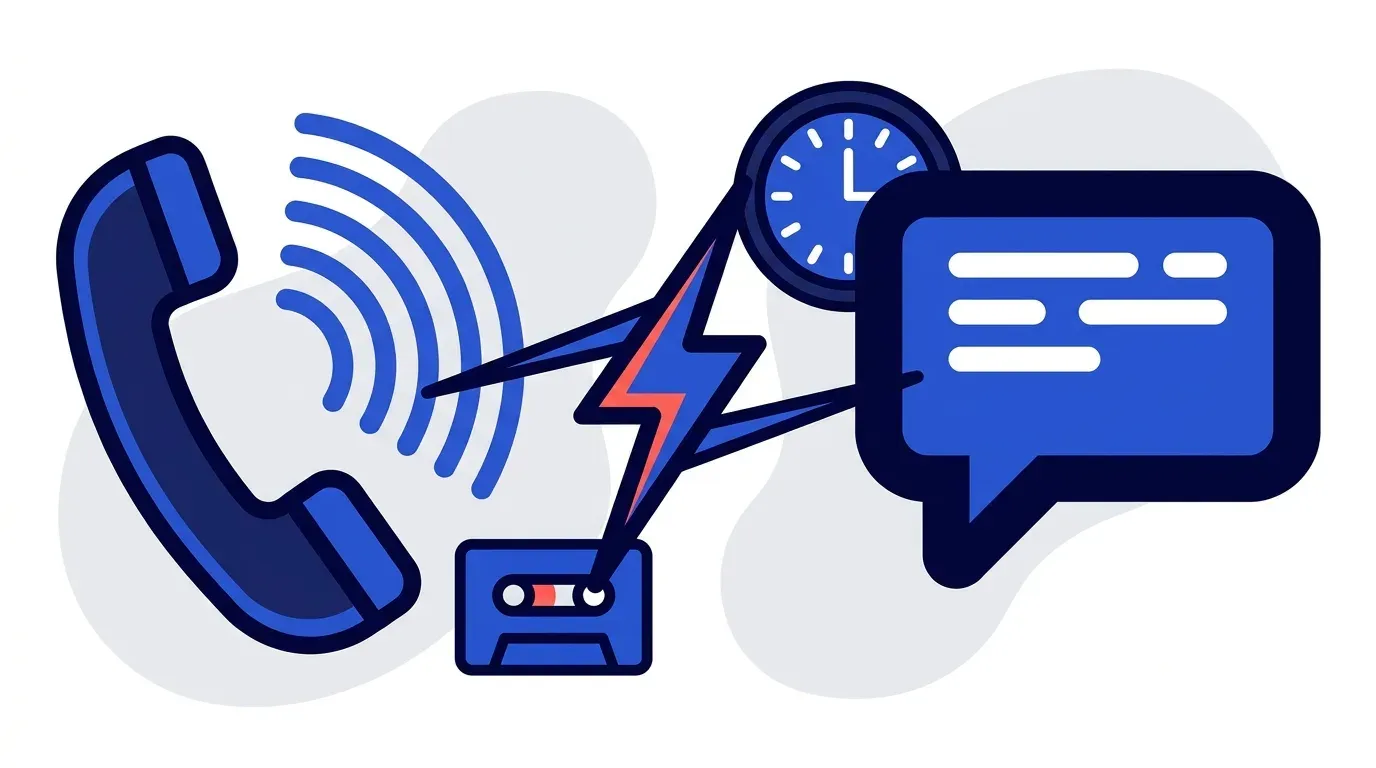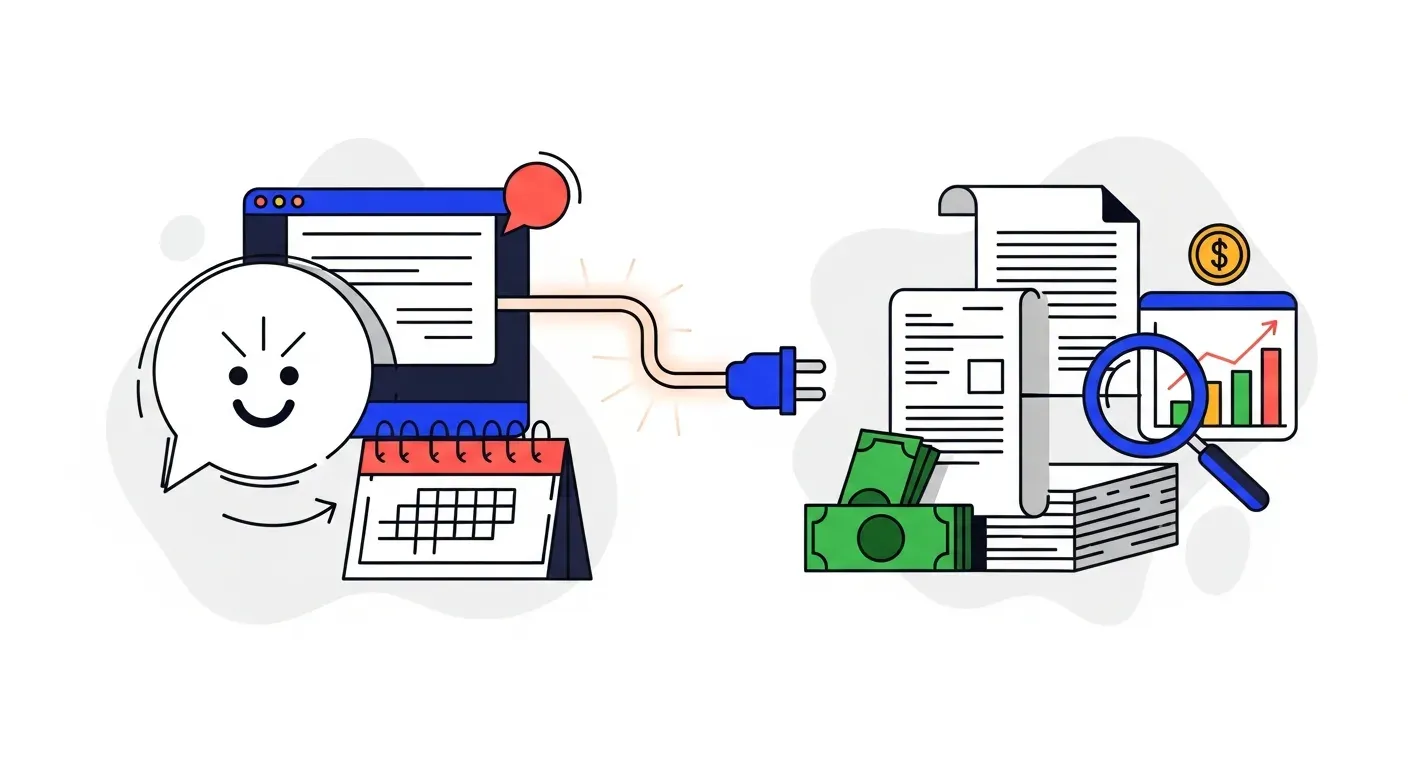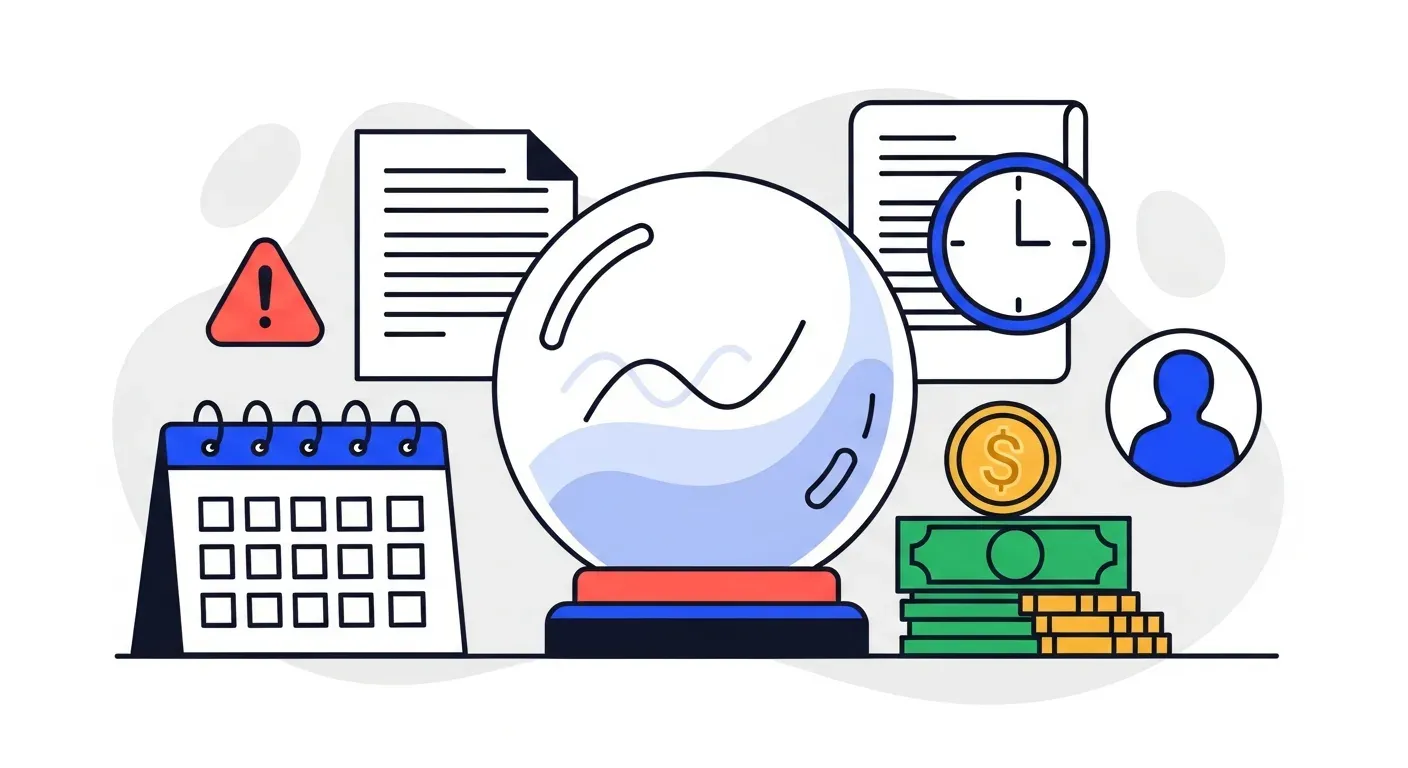


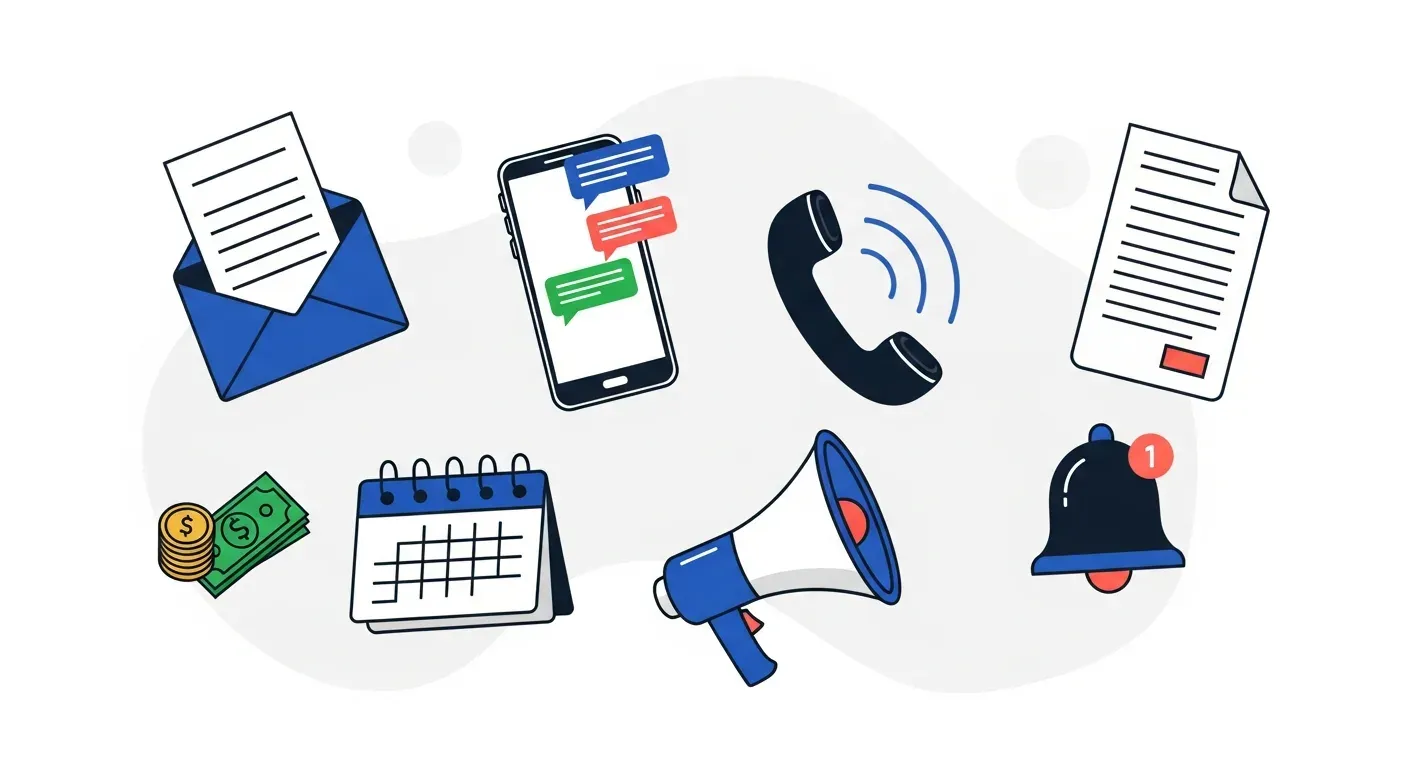
Email-only payment chasing has diminishing returns after the second or third reminder. SMS response rates are 45% compared to email's 7-9% click rate. The most effective approach combines email, SMS, WhatsApp, and AI voice calls in a structured escalation sequence. Different customers respond to different channels, and reaching them where they actually engage gets invoices paid faster.
Most finance teams chase payments the same way: send an email reminder, wait a few days, send another one, wait some more, send a third. At some point, someone picks up the phone and makes a call. This process has not changed much in 20 years.
The problem is that email effectiveness for payment collection has declined significantly. Inboxes are overcrowded. Open rates for payment reminders hover around 20%. Click-through rates are 7-9%. After the second or third reminder, most customers have already learned to ignore them.
Meanwhile, 55% of all US invoices are paid late, and 11% are never collected at all. Something is not working. Escalating across channels is a core feature of accounts receivable automation software, and it is the fix this post makes the case for.
Why single-channel chasing fails
Relying on a single communication channel for payment follow-up creates three problems:
Diminishing returns. Each subsequent email to the same customer gets less attention than the last. By the fourth or fifth reminder, your email is functionally invisible.
Channel mismatch. Not every customer lives in their inbox. Operations managers, field workers, and small business owners often check email once a day or less. If email is your only channel, you are unreachable to these customers during the hours they are most responsive.
No escalation signal. When every reminder looks the same (another email), there is no urgency signal. The customer has no reason to believe this reminder is more important than the last three. A channel switch, from email to SMS or a phone call, communicates that the situation has escalated.
The case for multi-channel
Different channels have dramatically different response rates:
| Channel | Open/reach rate | Response rate | Best for |
|---|---|---|---|
| ~20% open rate | 7-9% click rate | Initial reminders, documentation | |
| SMS | ~90% open rate | 45% response | Time-sensitive, field workers, SMBs |
| ~95% open rate | 40-50% response | Markets where WhatsApp dominates (LATAM, Europe, Asia) | |
| AI voice calls | Direct contact | Highest per-contact | Escalation, unresponsive customers |
| Phone (manual) | Direct contact | High but inconsistent | Complex situations, relationship accounts |
The data shows that adding SMS alone typically gets invoices paid 5-7 days faster. Combining SMS with voice escalation can reduce DSO by 15-20+ days.
The effectiveness is not about any single channel being better. It is about reaching customers where they actually respond and creating escalation signals that communicate urgency.
How each channel fits the collection process
Email: the foundation
Email is where most collection workflows start, and for good reason. It provides a written record, supports detailed invoice information, and can include direct payment links. For the first 1-2 reminders, email is appropriate and effective.
Where email falls short is persistence. After the initial reminders, continued emails start getting filtered, ignored, or lost in inbox noise.
Best practices for email reminders:
- Include a direct payment link in every message
- Keep the subject line clear and specific (invoice number + amount + due date)
- Personalize the sender name (a person, not "accounts@company.com")
- Send the first reminder 7 days before the due date
For practical email and SMS templates at every aging stage, see our invoice reminder best practices guide.
SMS: the engagement driver
SMS cuts through inbox noise. With a 90% open rate and an average response time of 90 seconds, it is the most effective channel for getting a customer's attention on a time-sensitive payment.
SMS works particularly well for:
- Customers in operations, logistics, or field roles who are not at a desk
- Small business owners who manage finances on their phone
- Quick confirmations ("Payment of $2,500 for Invoice #1042 is due tomorrow. Pay here: [link]")
- Follow-ups after email reminders have gone unanswered
WhatsApp: the global channel
In many markets outside North America, WhatsApp is the primary business communication channel. If you work with customers in Latin America, Europe, the Middle East, or Asia-Pacific, WhatsApp reminders may be more effective than both email and SMS combined.
WhatsApp also supports richer content: you can send invoice PDFs, payment confirmations, and have threaded conversations about disputes or questions, all in one place.
AI voice calls: the escalation tool
Phone calls are the most persuasive collection channel. A direct conversation resolves questions, surfaces disputes, and creates commitment in a way that written communication cannot. The problem is that making manual collection calls is time-consuming, stressful for staff, and inconsistent.
AI voice calls solve this by automating the call itself. The AI can:
- Deliver a professional, consistent message about the overdue invoice
- Answer basic questions about the amount, due date, and payment methods
- Escalate to a human agent if the conversation requires it
- Make calls at scale, covering dozens of overdue accounts in the time it takes a human to handle one
This is the channel for invoices that have been unresponsive to email and SMS. It communicates a clear escalation in urgency without requiring your team to spend hours on the phone.
Building a multi-channel escalation sequence
The most effective approach is a structured sequence that escalates through channels as invoices age:
7 days before due date: Email reminder with payment link.
Due date: Email confirmation that payment is expected.
3 days overdue: SMS or WhatsApp message with a direct payment link.
7 days overdue: Second email with firmer tone.
14 days overdue: SMS follow-up. If no response, AI voice call.
21 days overdue: Direct email to a senior contact at the customer. SMS to the original contact.
30+ days overdue: AI voice call escalation. Consider sending to collections if no response after 60-90 days.
The key principle is that each escalation step uses a different channel or reaches a different person. Repetition on the same channel to the same contact has diminishing returns.
Why automation makes multi-channel practical
Managing a multi-channel sequence manually is not realistic. If you have 100 active invoices at different stages of aging, each requiring different channels and timing, you would need someone working full-time just to coordinate the follow-ups.
Yonovo automates this entire sequence. You define the rules once, and the system handles the execution: sending the right message, on the right channel, to the right contact, at the right time. When a payment comes in, it automatically stops the sequence for that invoice and syncs the status back to QuickBooks or Xero.
TDG Inc saw an 80% drop in manual follow-ups after switching to automated multi-channel sequences, and their DSO dropped by 15 days in the first quarter.
The practical barrier to multi-channel is not strategy. It is execution. Automation removes that barrier.
Frequently Asked Questions
What is multi-channel payment chasing?
Multi-channel payment chasing means using more than one communication method to follow up on unpaid invoices. Instead of relying solely on email, you combine email with SMS text messages, WhatsApp messages, and AI-powered voice calls. Each channel reaches customers differently, and using multiple channels increases the chances of getting a response and collecting payment.
Why is email not enough for payment reminders?
Email open rates for payment reminders average around 20%, with click-through rates of 7-9%. After the second or third email reminder, response rates drop further as customers learn to ignore them. Email also competes with hundreds of other messages in the inbox. Channels like SMS have 90% open rates and 45% response rates, making them far more effective for time-sensitive payment requests.
How effective is SMS for collecting payments?
SMS is one of the most effective channels for payment collection. Open rates are approximately 90%, and the average response time is 90 seconds. Businesses that add SMS to their collection process typically get paid 5-7 days faster than those using email alone. SMS works especially well for customers in the field, in operations roles, or at small businesses where email is checked less frequently.
What are AI voice calls for collections?
AI voice calls are automated phone calls that use artificial intelligence to have natural conversations with customers about overdue invoices. They provide the effectiveness of a phone call (the most persuasive collection channel) without requiring your team to make manual calls. AI voice calls are particularly useful for escalation, reaching customers who have not responded to email or SMS.
Can I automate multi-channel payment reminders?
Yes. Platforms like Yonovo let you build automated escalation sequences that start with email, add SMS and WhatsApp at specific intervals, and escalate to AI voice calls for invoices that remain unpaid. Each step triggers automatically based on rules you set, so your team does not need to manually decide when to switch channels.
Which payment channel has the highest response rate?
Phone calls have the highest conversion rate for individual contacts, but they are time-intensive and stressful for staff. SMS has the highest response rate at scale (45%), followed by WhatsApp in regions where it is the dominant messaging platform. The most effective approach is not choosing one channel but combining them in a sequence that escalates based on invoice age.