

Dunning

Dunning Management Software

Dunning is the process of reminding customers to pay what they owe, in writing, on a schedule. Half the people searching this word half know it. So here is the plain version, then the software that runs it.

Dunning is the structured sequence of payment reminders a business sends as an invoice ages. A dunning sequence is several notices that shift in tone from friendly to firm as the invoice gets older. It differs from a single payment reminder because it keeps going until the invoice is resolved, and it differs from collections because dunning is the written reminder layer inside the broader collections process.

Trusted by teams who hate chasing payments

TroyesTDG IncSBC
The sequence

What a dunning sequence should contain

Four stages, each with its own timing, channel, and tone. Skip a stage, or send notices at random, and customers learn that your due dates are suggestions.

1

Reminder

1 to 30 days overdue

Email. Friendly. Assume oversight, make paying easy.

2

Firm follow up

31 to 60 days overdue

Email, then text. Professional and direct. Establish urgency, ask what is wrong.

3

Urgent notice

61 to 90 days overdue

Email and phone. Formal. Involve senior contacts, state consequences.

4

Final demand

90+ days overdue

Letter and email. Formal and final. The last step before collections or legal action.

These stages are the summary view. The day by day timing underneath them, first reminder 7 days before due, channel switches at days 14 and 21, is covered in our guide to reminder timing in detail. For copy ready notices at every stage, see our dunning letter templates and examples.

The catch

Where template dunning breaks down

A fixed sequence works until reality shows up. These are the four situations where sending the next scheduled notice is exactly the wrong move.

A customer disputes the invoice

Keeps sending on schedule, escalating tone included, as if nothing happened.

Pause the disputed portion only. The undisputed balance stays in the sequence, and a person follows up on the dispute.

A partial payment arrives

Dunns the original full amount, which reads as sloppy at best and hostile at worst.

Update the balance and adjust the sequence. The next notice reflects what is actually owed.

A good customer you cannot afford to annoy

Gets the same tone and cadence as everyone else.

Runs a slower, softer cadence you set per segment. Key accounts get a personal touch before a firm notice.

A customer with their own payment rhythm

Escalates on schedule anyway, annoying someone who always pays, just late.

Learn the pattern and adapt. The sequence reflects what actually works for each customer.

How Yonovo handles it

Dunning that adapts instead of blasting

Yonovo runs the sequence, but it treats the sequence as a starting point, not a script. It works straight from your ledger through the QuickBooks integration, and for invoices raised in Stripe, the Stripe Billing integration.
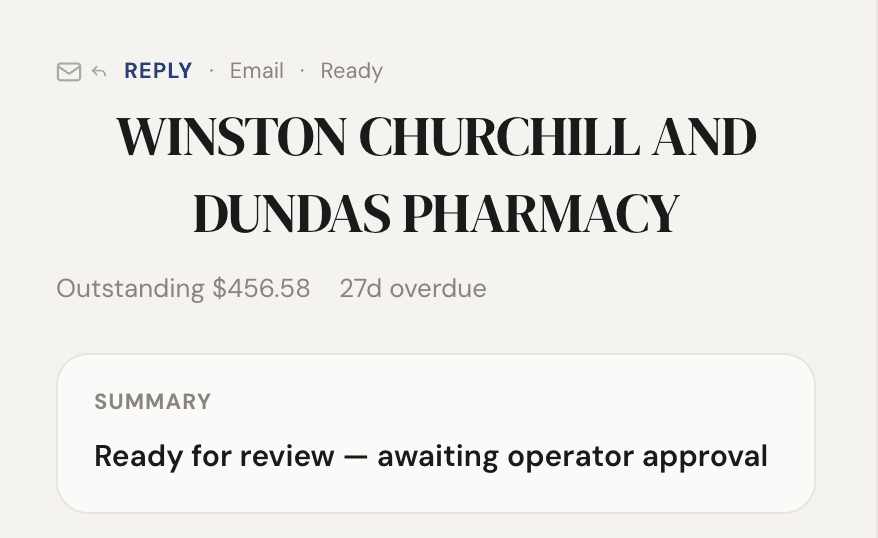
Yonovo message review showing human oversight before notices send

Channel mix

Email, SMS, phone, and WhatsApp, escalating as the invoice ages. A notice that gets ignored on one channel moves to the next.

Human oversight

Review every notice before it sends, or let your rules run. Disputes and sensitive accounts escalate to your team with full context.

Learns each customer

Yonovo adapts its approach over time, learning what works for each customer, so the sequence fits the account instead of fighting it.

80%fewer manual follow ups
15 dayscut from DSO
25+ hrssaved per week
“The most valuable thing Yonovo delivered was giving us our time back. We went from spending hours every day on collections to barely thinking about it. The system just handles it.”
Mohammad Alshalabi, Director of Finance, TDG Inc

Frequently asked questions

Dunning is the process of reminding customers to pay what they owe, in writing, on a schedule. The word covers the whole sequence of payment reminders a business sends as an invoice ages, from the first friendly note to the final demand.
A dunning letter is a written request for payment on an overdue invoice. It is not an invoice and not a statement. The invoice tells a customer what they owe, a statement summarizes their account, and a dunning letter asks for payment that is late. It exists to move money, not to inform.
Dunning management software runs the reminder sequence automatically. It tracks invoice age, sends each notice at the right stage with the right tone, switches channels when messages are ignored, and pauses when a payment, dispute, or promise changes the situation. It replaces the spreadsheet and the memory of whoever usually sends the reminders.
Dunning is the written reminder layer inside the broader collections process. Collections covers everything: reminders, phone calls, escalation decisions, disputes, payment plans, and when to involve outside help. If collections is the whole playbook, dunning is the letters chapter.
Four stages that escalate with age: a friendly email reminder in the first 30 days overdue, a firm follow up by email and text at 31 to 60 days, an urgent notice by email and phone at 61 to 90 days involving senior contacts, and a formal final demand past 90 days. Tone shifts from friendly to formal as the stages progress.
Two or three unanswered notices on one channel is the signal to change something: add a text message, make a phone call, or write to a more senior contact. And once a final demand deadline passes, stop sending letters. More notices after a final demand teach the customer that your deadlines are soft.
Template dunning might. That is why Yonovo lets you set cadence and tone per customer segment, and why it learns what works for each customer over time. Consistent, professional reminders usually read as good bookkeeping, not aggression. Troyes automated its reminders and had zero customer complaints.
Yes. Yonovo connects to Stripe Billing as well as accounting systems like QuickBooks Online, Xero, NetSuite, Sage Intacct, and Odoo. Invoices sync in, the dunning sequence runs across email, SMS, phone, and WhatsApp, and payment status syncs back.

Ready to put collections on autopilot?

Join the finance teams that are collecting faster, saving hours, and keeping every customer relationship intact.
