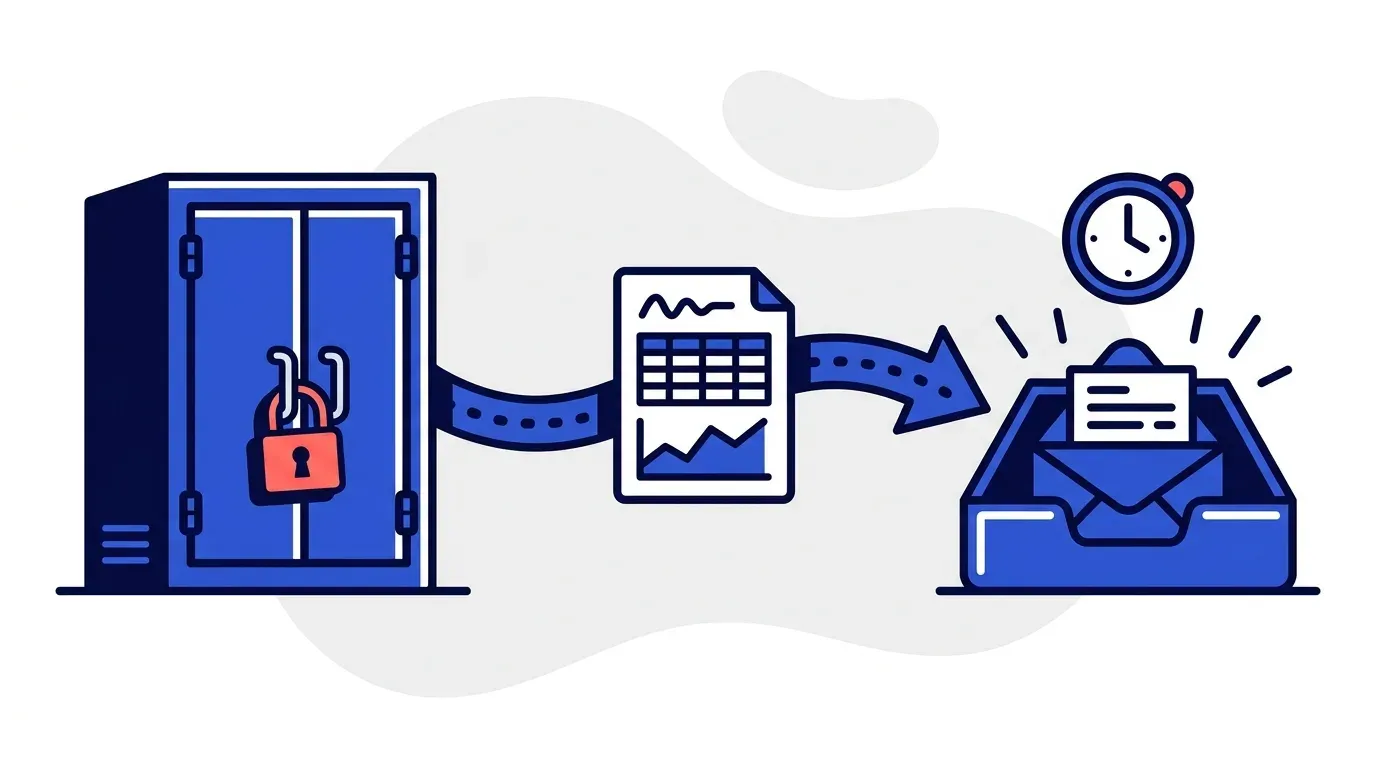




A credit hold is a block a supplier places on a customer's account so that no new orders ship on credit until a past due balance is paid or resolved. It is a B2B accounts receivable control, not the same thing as a credit card hold or a credit freeze. Place holds early, based on a written rule such as 30 days past due or an exceeded credit limit, tell the customer before the hold takes effect, and release it as soon as the balance is cleared. Customers who land on hold repeatedly should move to payment up front.
A credit hold is a block a supplier places on a customer's account so that no new orders ship on credit until a past due balance is paid or the issue behind it is resolved. The customer can usually still buy by paying up front. The hold comes off once the account is back in good standing.
It is one of the few pieces of leverage a B2B supplier has, and most companies use it too late. This guide covers what a credit hold is, when to place one, how to tell the customer, when to release it, and what to do with customers who keep landing on hold.
Credit hold, credit card hold, and credit freeze
Search for "credit hold" and you will mostly find articles about hotels holding money on a consumer's card. Those are different things.
| Term | Who uses it | What it means |
|---|---|---|
| Credit hold | B2B suppliers | New orders on credit are blocked for a customer account until a past due balance or credit limit issue is resolved |
| Credit card hold (authorization hold) | Merchants and card issuers | A temporary amount reserved on a card, for example at a hotel or rental counter, until the final charge posts |
| Credit freeze | Consumers and credit bureaus | A lock on a person's credit report so new accounts cannot be opened in their name |
This article is about the first one: the control a supplier uses when a customer who buys on net terms stops paying on time. You will also see it called an order hold, account hold or credit block.
Why suppliers put accounts on credit hold
When you sell on net 30 or net 60 terms, you are lending your customer money. A credit hold stops that loan from growing while the existing balance is overdue.
It does three things:
- Caps your exposure. Every order you ship to a customer who is not paying adds to a balance you may never collect.
- Creates a reason to pay. A customer who needs their next order has a concrete reason to clear the old one.
- Moves the conversation. An invoice buried in a payables queue gets attention quickly when purchasing cannot get its order released.
That second point is the whole mechanism. A credit hold only works when the customer tries to order again. Which is exactly why timing matters.
The problem with holding too late
In practice, many suppliers only place a hold once an account is badly overdue, then wait for the customer to try to place their next order. At that point the customer usually pays.
It works, eventually. But by the time the hold goes on, often 90 days or more, the balance has grown with every order shipped in the meantime, and the leverage arrives months after it was needed. If the customer is actually in trouble, a late hold means you have been extending credit to someone who could not pay.
The better policy fits in two sentences. Put accounts on hold earlier. And if a customer has to be put on hold two or three times, stop extending credit and move them to payment up front, because repeat holds are a signal that net terms no longer fit the customer.
When to place a credit hold
Holds work best when they follow a written rule rather than someone's mood on a given day. Common triggers:
| Trigger | Typical threshold | Why it works |
|---|---|---|
| Days past due | Any invoice 30 to 45 days past due | Early enough that the balance is still small |
| Credit limit exceeded | Open balance above the approved limit | Stops exposure growing past what you agreed to carry |
| Broken promise to pay | A committed payment date is missed | The customer has already had one chance |
| Returned payment | A bounced check or reversed ACH | A direct warning sign |
| Financial distress signals | Late payments to you getting later, news of layoffs, a bankruptcy filing | Protects you before the situation gets worse |
Two exceptions to build into the rule:
- Disputed invoices. If the customer is waiting on a credit memo, a corrected invoice or a proof of delivery from you, the delay is partly yours. Resolve the dispute before you hold. See short pays and deductions for how to separate a genuine dispute from a stalled payment.
- Strategic accounts. Decide in advance who can approve an exception for your largest customers, so the call is made on purpose and not by whoever answers the phone.
Your credit limits and terms come from your broader credit policy. If you are setting one up, the 5 C's of accounts receivable management and how AI can help with customer credit decisions cover how to size them.
A three step credit hold policy
Here is a simple policy based on the approach above. Adjust the numbers to your terms and margins.
| Step | Trigger | Action |
|---|---|---|
| 1. Warning | Any invoice 15 days past due | Firm reminder that states the hold date if payment does not arrive |
| 2. Credit hold | Any invoice 30 days past due, or over the credit limit | New orders on credit blocked. Customer can still buy with payment up front |
| 3. Payment up front | Two or three holds in 12 months | Terms move from net 30 to cash in advance, or the credit limit is reduced. Review after six months of on time payment |
Write it down, share it with sales and customer service, and include the key terms in your customer credit application or terms and conditions so it never comes as a surprise.
How to tell a customer they are going on credit hold
Always warn the customer before the hold takes effect. A hold that surprises a customer lands on your sales team. A hold that was clearly announced usually gets paid before it starts.
Subject: Account [number]: credit hold on [date] unless payment is received
Hi [Name],
Invoices [numbers] totaling $[amount] are now [X] days past due.
Under our credit terms, the account will go on credit hold on [date] if we have not received payment by then. While the account is on hold, new orders can still be placed with payment in advance, but we cannot ship on credit.
If payment is already on its way, please reply with the payment date or remittance details and we will make a note on the account. If anything on these invoices is holding up approval on your side, let us know and we will sort it out right away.
Payment details and copies of the invoices are attached.
Thanks, [Your name]
Keep it factual. The goal is payment and a working relationship afterwards, not a threat. For firmer wording at later stages, see our dunning letter templates and invoice reminder templates.
Releasing a credit hold
Release criteria should be as clear as the triggers:
- The past due balance is paid in full, or brought back under the credit limit
- A disputed invoice is resolved and the undisputed balance is paid
- A payment plan is agreed in writing and the first payment has arrived
Record who approved the release and the reason. Then release quickly. A hold that stays on after the customer has paid blocks revenue you want and gives them a reason to try a competitor.
Common credit hold mistakes
Holding too late. A hold placed at 90 days protects very little. Most of the exposure has already shipped.
No notice. The first time the customer hears about the hold is when their order does not ship. That call goes to your sales rep, not to finance.
Sales does not know. If sales and customer service cannot see which accounts are on hold, orders get promised that cannot ship.
Holding over a dispute you caused. If the invoice was wrong or the proof of delivery was never sent, fix that first.
Never escalating to payment up front. A customer who is on hold every quarter is using your credit as free financing. Change their terms.
Never reviewing. Customers who have paid on time for a year deserve their terms back. Put a review date on every change.
Where credit hold fits in your collections process
A credit hold is not the end of collections. It sits in the middle. The usual order is:
- Reminders before and after the due date
- Firmer follow up and a second channel such as a text or call
- Credit hold warning, then credit hold
- Escalation to a senior contact and a payment plan conversation
- Payment up front terms for repeat offenders
- Collections agency or write off for balances that will not be paid
Step 6 is covered in when to send unpaid invoices to collections. Most accounts never get there when steps 1 to 3 happen on time.
How Yonovo handles credit holds
Yonovo runs the follow up sequence on every open invoice and applies your credit hold rules as part of it:
- Flags accounts that hit your trigger, such as days past due or an exceeded credit limit, so the decision is made at 30 days instead of discovered at 90
- Sends the hold warning automatically, from your domain and signature, with the invoices and payment details attached
- Puts the account in front of your team in the AR inbox, with the full payment and conversation history, so a person confirms the hold and places it in your ERP or order system
- Pauses on disputes, so customers waiting on a correction from you are not threatened with a hold
- Tracks repeat holds per customer, so moving an account to payment up front is based on the record rather than memory
Put your credit hold policy on a schedule
Yonovo flags accounts for credit hold on your rules and sends the warning before the hold, not after.
To see the full workflow day by day, read how Yonovo runs accounts receivable collections, or see how it works for manufacturers and wholesale distributors, where credit holds are most common.
Frequently Asked Questions
What does credit hold mean?
Credit hold means a supplier has stopped extending credit to a customer until an issue is resolved, usually an overdue balance or an exceeded credit limit. While the account is on hold, new orders are not shipped on credit. The customer can usually still buy by paying in advance, and the hold is released once the past due balance is paid or a payment arrangement is agreed.
What is the difference between a credit hold and a credit card hold?
A credit hold is a business to business control: a supplier blocks new orders for a customer account that owes money. A credit card hold, sometimes called an authorization hold, is a temporary amount a merchant reserves on a consumer's card, for example at a hotel or car rental counter. A credit freeze is something else again: a consumer locking their credit report so new accounts cannot be opened in their name.
When should you put a customer on credit hold?
Put a customer on hold when they cross a line you have written down in advance, not when someone gets frustrated. Common triggers are any invoice more than 30 or 45 days past due, a balance above the approved credit limit, a broken promise to pay, a returned payment, or a signal that the customer is in financial trouble. The earlier the trigger, the more leverage the hold gives you.
Do you have to tell a customer they are on credit hold?
You should. Send notice before the hold takes effect, state which invoices are overdue and the total, explain what the hold means for new orders, and say exactly what will release it. A customer who learns about a hold when their order does not ship will call sales angry. A customer who was warned usually pays.
How do you release a credit hold?
Release the hold as soon as the condition that triggered it is fixed: the past due balance is paid, a disputed invoice is resolved, or a payment plan is agreed and the first payment arrives. Record who approved the release and why. Release quickly, because a hold that lingers after payment damages the relationship and blocks revenue you want.
What happens if a customer keeps going on credit hold?
Repeated holds are a sign the customer's credit terms no longer fit their payment behavior. A common policy is that after two or three holds within a year, the customer moves from net terms to payment up front, also called cash in advance, or to a lower credit limit. Review the account again after a period of on time payment.
Is a credit hold the same as sending an account to collections?
No. A credit hold is an internal control that pauses new credit while you keep collecting the balance yourself and keep the customer relationship. Sending an account to collections means handing the debt to a third party agency, usually after the relationship is effectively over. A credit hold comes first, often months earlier.