


AI can flag invoices likely to be disputed by analyzing patterns in payment behavior, communication signals, and historical data. Instead of reacting to disputes after they are filed, AI-powered AR platforms identify early warning signs like slowing payment velocity, partial payments, and unresponsive contacts, giving finance teams time to resolve issues proactively. Companies that shift from reactive dispute handling to proactive detection recover more revenue, preserve customer relationships, and keep DSO under control.
A $42,000 invoice goes 15 days past due. Your AR specialist sends the standard reminder. No response. She calls. Voicemail. A week later the customer replies with a single sentence: "We are disputing this invoice due to a quantity discrepancy on line item 7."
Now your team has to stop what they are doing, pull the purchase order, compare it to the delivery receipt, loop in the sales rep, and spend the next three weeks going back and forth. Meanwhile, $42,000 sits in limbo. Your aging report gets worse. Your cash flow forecast becomes unreliable. And the customer relationship takes a hit that no amount of polite emails will fully repair.
Here is the thing: that dispute did not come out of nowhere. The signals were there weeks earlier. Your team just was not equipped to see them.
Why payment disputes are so expensive
Payment disputes cost more than the disputed amount. The Atradius Payment Practices Barometer reports that B2B companies write off an average of 2.1% of annual revenue as uncollectable, and disputes are a leading contributor. But the visible write-off is only part of the picture.
The direct costs
Each dispute requires investigation. Someone on your finance team has to pull the original order, review delivery documentation, cross-reference pricing, and communicate with the customer (often through multiple rounds). Industry research from the Credit Research Foundation estimates that resolving a single B2B payment dispute costs $20 to $50 in direct labor, not counting the cost of delayed payment.
For companies processing thousands of invoices per month, even a 3% to 5% dispute rate means dozens of disputes consuming hours of AR staff time every week. That is time not spent on collections follow-up, cash application, or strategic work.
The hidden costs
The bigger damage is often invisible:
- Extended DSO. Disputed invoices sit in your aging report for 30 to 90 additional days while resolution drags on. This inflates your days sales outstanding and reduces working capital availability.
- Relationship erosion. Disputes create friction. Even when resolved in your favor, the customer remembers the back-and-forth. Repeat disputes can push customers to competitors who make the billing process smoother.
- Cascading inaccuracies. A disputed invoice throws off your AR aging report, your cash flow forecast, and your revenue recognition. Downstream decisions made on inaccurate data compound the problem.
- Opportunity cost. Every hour your AR team spends on disputes is an hour they cannot spend on proactive collections that actually reduce DSO.
The companies that handle disputes best are not the ones with the fastest resolution process. They are the ones that prevent disputes from happening in the first place.
What causes B2B payment disputes
Understanding the root causes of disputes reveals why they are predictable, and therefore preventable.
Invoice discrepancies
The most common trigger is a mismatch between what the customer expected and what the invoice says. This includes quantity differences (ordered 500, invoiced for 520), pricing errors (quoted $12 per unit, invoiced at $14), missing credits or discounts, and duplicate invoices. These discrepancies often originate upstream in the order or delivery process, but they surface as AR problems because the invoice is where the customer first notices them.
Delivery and quality issues
Goods that arrived damaged, late, or incomplete generate disputes even when the invoice itself is technically correct. The customer's position is reasonable: they should not pay full price for a partial or defective delivery. These disputes are harder to prevent from the AR side alone, but they follow predictable patterns tied to specific products, shipping routes, or fulfillment processes.
Communication gaps
Many disputes escalate from simple misunderstandings. A customer who cannot reach anyone to ask about a line item on their invoice will eventually dispute the entire amount. A buyer whose purchase order referenced different terms than the invoice will flag it formally rather than sort it out informally if they cannot get a response to their initial inquiry.
Contractual and terms disagreements
Long-term contracts with complex pricing, volume discounts, or milestone-based billing create fertile ground for disputes. Each invoice is an interpretation of the contract, and interpretations differ. These disputes tend to be higher-value and take longer to resolve.
The early warning signs AI can detect
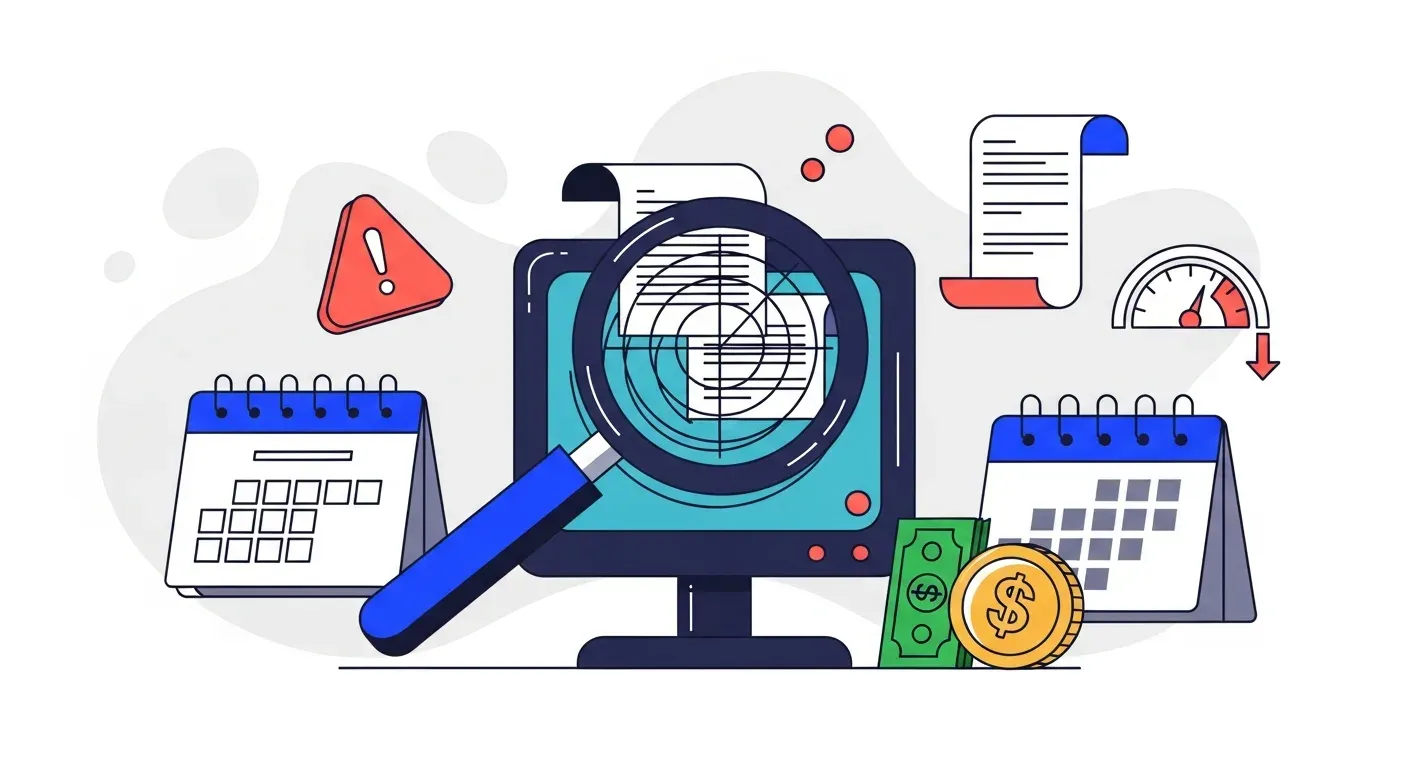
Disputes almost never appear without prior signals. The problem is that these signals are scattered across different data points, emails, payment records, customer behavior patterns, and they are nearly impossible for a human to aggregate manually across hundreds of accounts. This is exactly what AI excels at.
Payment velocity changes
When a customer who typically pays within 25 days suddenly starts taking 40 or 45 days, something has changed. Maybe their cash flow tightened (a Capacity issue in the 5 C's framework). Maybe they are unhappy with a recent delivery. Maybe there is a discrepancy they have not raised yet but are dragging their feet on paying.
AI tracks payment velocity for every customer over time and flags statistically significant slowdowns. A three-day drift might be noise. A consistent 15-day deceleration over the past three invoices is a signal worth investigating.
Partial payment patterns
A customer who pays $9,700 against a $10,000 invoice is telling you something. Maybe they took an early payment discount they were not entitled to. Maybe they are deducting for a damaged item. Maybe there is a pricing dispute they have not formalized yet.
Partial payments, especially unexplained ones, are one of the strongest predictors of a future formal dispute. AI flags these automatically and can distinguish between customers who routinely take small deductions (a known pattern you may choose to tolerate) and those showing a new partial-payment behavior that warrants attention.
Communication signal changes
When a customer stops responding to emails, does not return calls, or takes significantly longer to reply than their historical average, the risk of a dispute (or a delinquency) increases. AI-powered AR platforms that manage multi-channel follow-ups across email, SMS, voice, and WhatsApp track engagement metrics for every contact. A drop in engagement is often the first sign that something is wrong.
Historical dispute correlation
If a customer has disputed invoices before, the patterns around those disputes become predictive. Maybe disputes tend to happen with a specific product line, a specific sales rep's accounts, or after orders above a certain dollar amount. AI identifies these correlations across your entire receivables portfolio and applies them to new invoices as they are created.
Cross-account pattern recognition
Individual account analysis catches many disputes, but some patterns only become visible at the portfolio level. If three customers in the same industry all slow their payments in the same month, it might be a Conditions shift (industry downturn) rather than individual account issues. If disputes spike on invoices involving a particular product or service, there may be a systemic quality or pricing problem.
AI aggregates signals across your entire customer base and surfaces patterns that no human reviewing individual accounts would notice.
From reactive to proactive dispute management
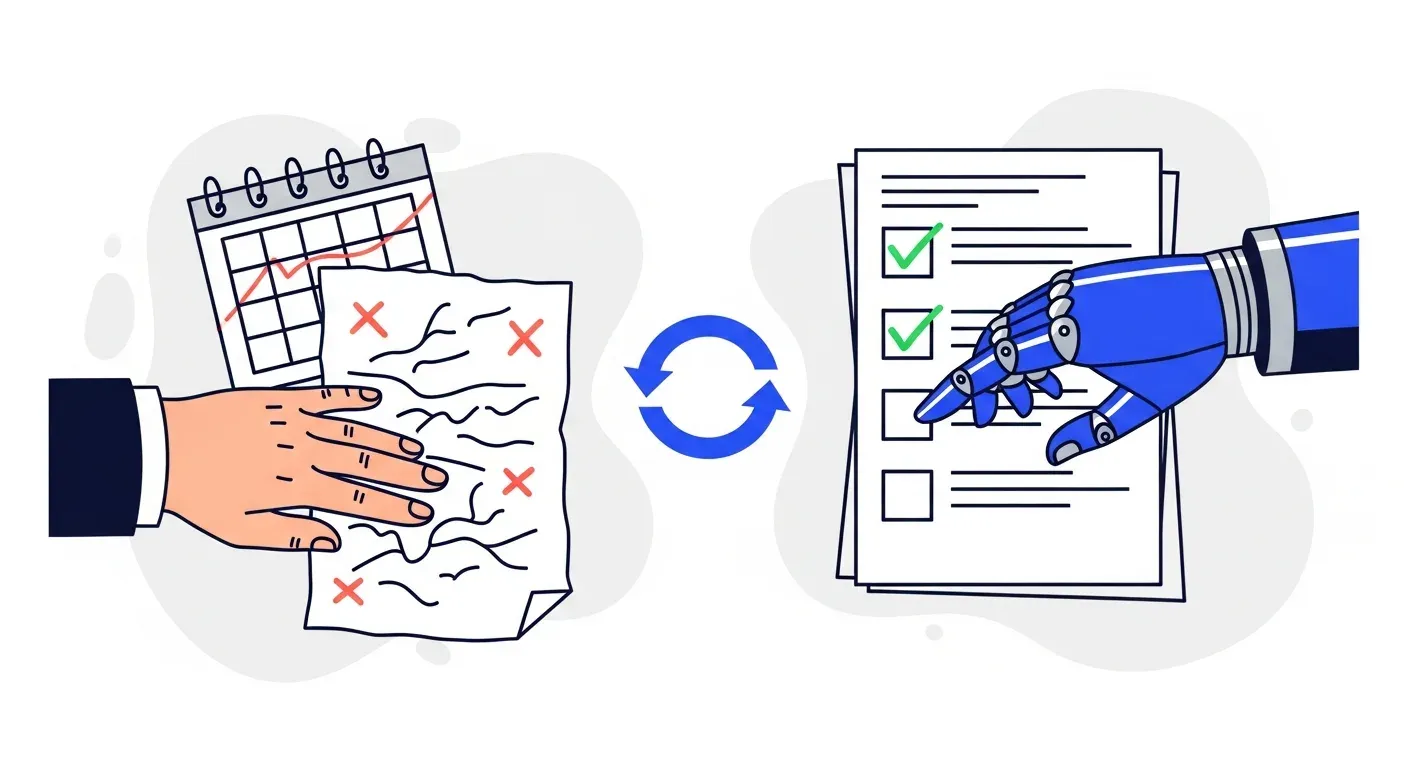
Most AR teams handle disputes reactively. The customer raises a dispute, and the team investigates and resolves it. This works, but it is slow, expensive, and damages relationships.
Proactive dispute management flips the process. Instead of waiting for the customer to raise the issue, your team addresses it before the invoice is even past due.
The proactive workflow
Here is how AI-powered dispute prevention works in practice:
-
Continuous monitoring. The AR platform analyzes every invoice, payment, and customer interaction as it happens. Payment velocity, partial payments, communication engagement, and historical patterns are all tracked in real time.
-
Risk scoring. Each open invoice receives a dispute risk score based on the signals detected. High-risk invoices are flagged and prioritized for proactive outreach.
-
Early intervention. Your AR team contacts the customer before the invoice is overdue. The conversation is not "where is our payment?" It is "we wanted to confirm everything looks correct on invoice #4271 before it comes due." This reframes the interaction from collection to customer service.
-
Issue resolution at the source. When proactive outreach surfaces a discrepancy (wrong quantity, missing discount, pricing mismatch), your team resolves it on the spot. A corrected invoice goes out immediately. The payment timeline stays on track.
-
Feedback loop. Every resolved issue feeds back into the AI model. The system learns which signals most reliably predict disputes in your specific business context, and its accuracy improves over time.
Why this works better
Proactive dispute management works because it changes the customer's experience. Instead of the customer discovering a problem, getting frustrated, filing a dispute, and waiting for resolution, they receive a call from your team confirming details and catching errors before they become problems.
Customers who feel that their vendor is attentive and proactive are more likely to pay on time, less likely to switch to a competitor, and more forgiving when genuine errors occur. The relationship value of dispute prevention often exceeds the direct financial savings.
Connecting your data for dispute detection
AI cannot detect dispute signals if it does not have access to the data. This is why integration between your AR platform and your accounting system is foundational.
When your QuickBooks, Xero, NetSuite, Sage, or Odoo instance is connected to your AR platform, the system has access to:
- Complete invoice history. Every invoice, credit note, and adjustment across all customers.
- Payment records. Full payment history including amounts, dates, methods, and references.
- Customer data. Contact information, payment terms, credit limits, and account status.
- Open AR aging. Current outstanding balances and aging buckets for the entire portfolio.
This data, combined with the communication and engagement data the AR platform captures from its own follow-up activities, creates a comprehensive picture of each customer's payment behavior and risk profile. The AI analyzes this picture continuously, not in periodic batch runs, but in real time as new data arrives.
Troyes went from fully manual to fully automated in a single day by connecting their accounting system and letting the platform handle monitoring and follow-ups. TDG Inc reduced manual follow-ups by 80% and cut DSO by 15 days within three months. In both cases, the automation did not just speed up existing processes. It enabled proactive management that was impossible with manual workflows.
Practical steps to reduce disputes starting today
You do not need a fully AI-powered system to start preventing disputes. Here are steps any finance team can take immediately, along with how automation amplifies each one.
Verify invoices before sending
The simplest way to prevent disputes is to make sure your invoices are correct before they go out. Cross-check quantities against delivery receipts. Confirm pricing against the purchase order or contract. Apply the correct discounts and terms. This sounds obvious, but invoice accuracy is a persistent problem in B2B transactions. APQC benchmarking data shows that top-performing companies have invoice error rates below 1%, while median performers run at 2% to 5%.
Automation helps by reducing manual data entry in the invoicing process. When invoice data flows directly from the order and delivery system to the accounting system, the opportunities for transcription errors shrink dramatically.
Segment customers by dispute risk
Not all customers need the same level of attention. Use your historical data to identify which customers, product lines, or order types generate the most disputes. Focus your proactive outreach on these high-risk segments first. Even a simple spreadsheet analysis of the past year's disputes can reveal actionable patterns.
With an AI-powered platform, this segmentation happens automatically and updates in real time. As customer behavior changes, their risk classification changes with it.
Respond to partial payments immediately
When a customer pays less than the invoiced amount, do not wait for the next reconciliation cycle to investigate. Contact the customer the same day to understand the reason. Was it an authorized discount? A quality deduction? A simple error? The faster you clarify, the less likely it escalates into a formal dispute.
Automated payment matching systems flag partial payments instantly, so your team can act on the same day the payment arrives rather than discovering it days later during a manual review.
Make it easy for customers to ask questions
Many disputes start because the customer could not get a straight answer to a simple question. Make sure your invoices include clear contact information. Respond to billing inquiries within one business day. Provide a self-service portal where customers can view their invoices and statements. The goal is to make informal resolution easier than filing a formal dispute.
Multi-channel communication through email, SMS, voice, and WhatsApp gives customers flexibility in how they reach you. Some prefer a quick text message over a phone call. Others want to talk to a person. Meeting customers where they are reduces the friction that turns questions into disputes.
Track dispute root causes
Every dispute is a data point. Track not just the resolution but the root cause. Was it a pricing error? A delivery issue? A contract misinterpretation? A duplicate invoice? Over time, this data reveals systemic issues you can fix upstream.
If 40% of your disputes stem from quantity discrepancies, the fix is not faster dispute resolution. The fix is improving your order fulfillment accuracy. If 30% come from pricing errors, the fix is better contract-to-invoice data flow. AI surfaces these root cause patterns automatically and at a scale that manual tracking cannot match.
The financial case for dispute prevention
Preventing disputes delivers measurable financial returns across multiple dimensions.
Reduced DSO. Every dispute avoided is 30 to 90 days of payment delay eliminated. For companies with significant dispute volumes, this translates directly to improved working capital.
Lower write-offs. Disputes that drag on for months frequently end in partial or full write-offs. Preventing the dispute prevents the write-off.
Staff reallocation. AR staff hours freed from dispute investigation can be redirected to proactive collections, credit management, and customer relationship work that directly improves cash flow.
Stronger customer relationships. Customers who never experience a billing dispute are more likely to remain loyal, increase their order volume, and pay on terms.
For manufacturing and wholesale distribution companies where margins are thin and invoice volumes are high, even a small reduction in dispute rates has a material impact on profitability. For professional services and software companies with larger but fewer invoices, preventing a single high-value dispute can justify the investment in better systems.
Stop fighting disputes. Start preventing them.
The shift from reactive dispute resolution to proactive dispute prevention is one of the highest-leverage improvements a B2B finance team can make. The signals are already in your data. AI makes them visible before they become problems.
If your AR team spends more time resolving disputes than preventing them, book a demo with Yonovo to see how AI-powered monitoring, multi-channel follow-ups, and real-time accounting integrations help you catch issues before they become disputes.
Frequently Asked Questions
How does AI predict payment disputes before they happen?
AI analyzes patterns across your accounts receivable data, including payment timing trends, partial payment frequency, communication responsiveness, and historical dispute records. When an invoice matches patterns that previously led to disputes, the system flags it for proactive outreach. This works because disputes rarely appear without warning. There are almost always behavioral signals in the weeks before a formal dispute is raised.
What are the most common early warning signs of a payment dispute?
The most reliable early indicators are a sudden slowdown in payment velocity for a previously prompt customer, partial payments without explanation, unanswered follow-up emails or calls, discrepancies between purchase orders and invoices, and a pattern of small deductions taken without prior communication. Any one of these signals warrants attention. Multiple signals on the same account should trigger immediate outreach.
How much do payment disputes cost B2B companies?
The direct costs include the disputed amount itself (which may be delayed for 30 to 90 days or more), the staff time to investigate and resolve each dispute (industry estimates range from $20 to $50 per dispute in labor costs alone), and potential write-offs for disputes that are never resolved. Indirect costs are often larger and include damaged customer relationships, distorted AR aging reports, and the opportunity cost of AR staff spending time on disputes instead of collections.
Can AI-powered dispute detection work with my existing accounting system?
Yes. AR automation platforms that offer dispute detection integrate directly with major accounting systems including QuickBooks, Xero, NetSuite, Sage, and Odoo. The integration syncs your invoice data, payment history, and customer records, giving the AI the historical context it needs to identify dispute risk patterns. No separate data migration or manual data entry is required.
What should I do when AI flags an invoice as high dispute risk?
Contact the customer before the invoice becomes overdue. Confirm they received the invoice and that the amounts, quantities, and terms match their expectations. Resolve any discrepancies on the spot. This proactive outreach converts potential disputes into routine clarifications and keeps the payment timeline on track. The goal is to remove the reason for the dispute before the customer has a reason to file one.