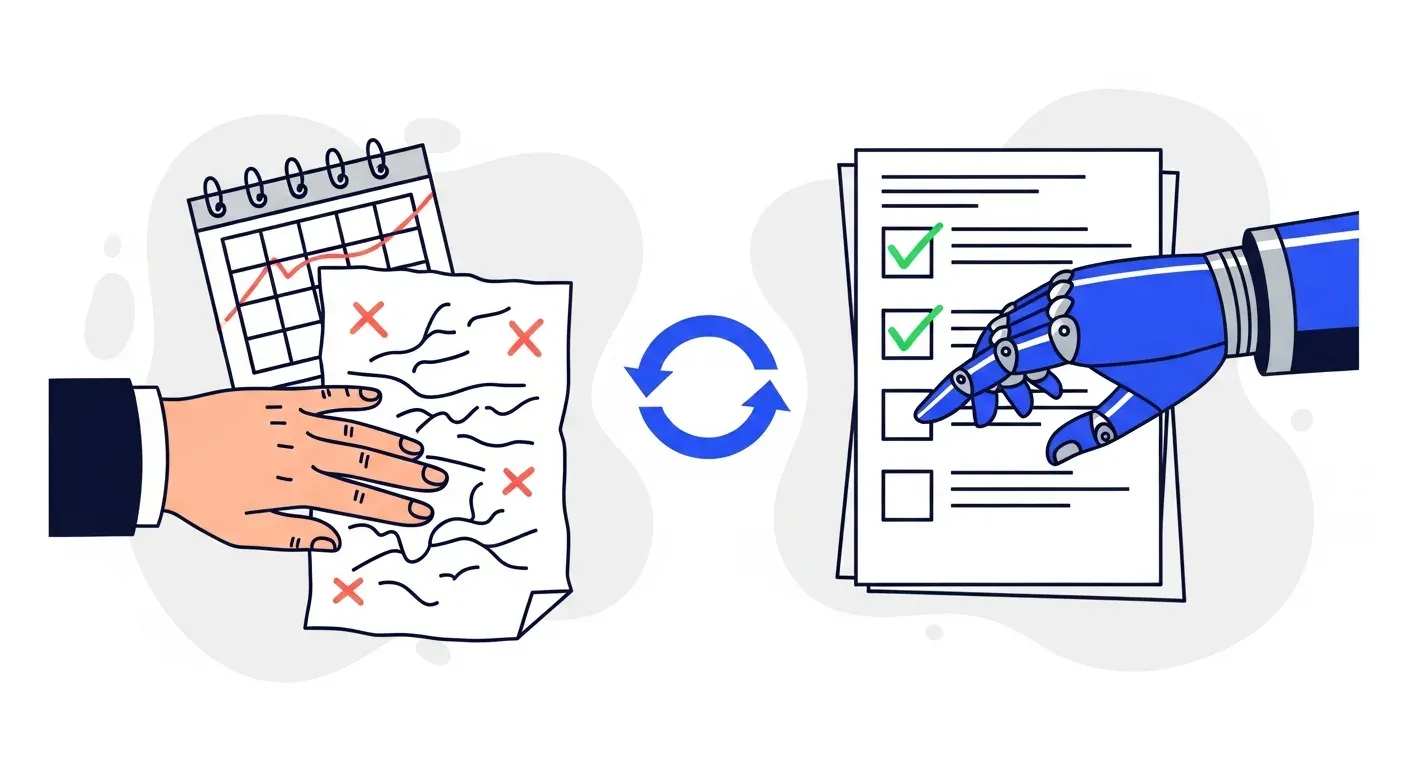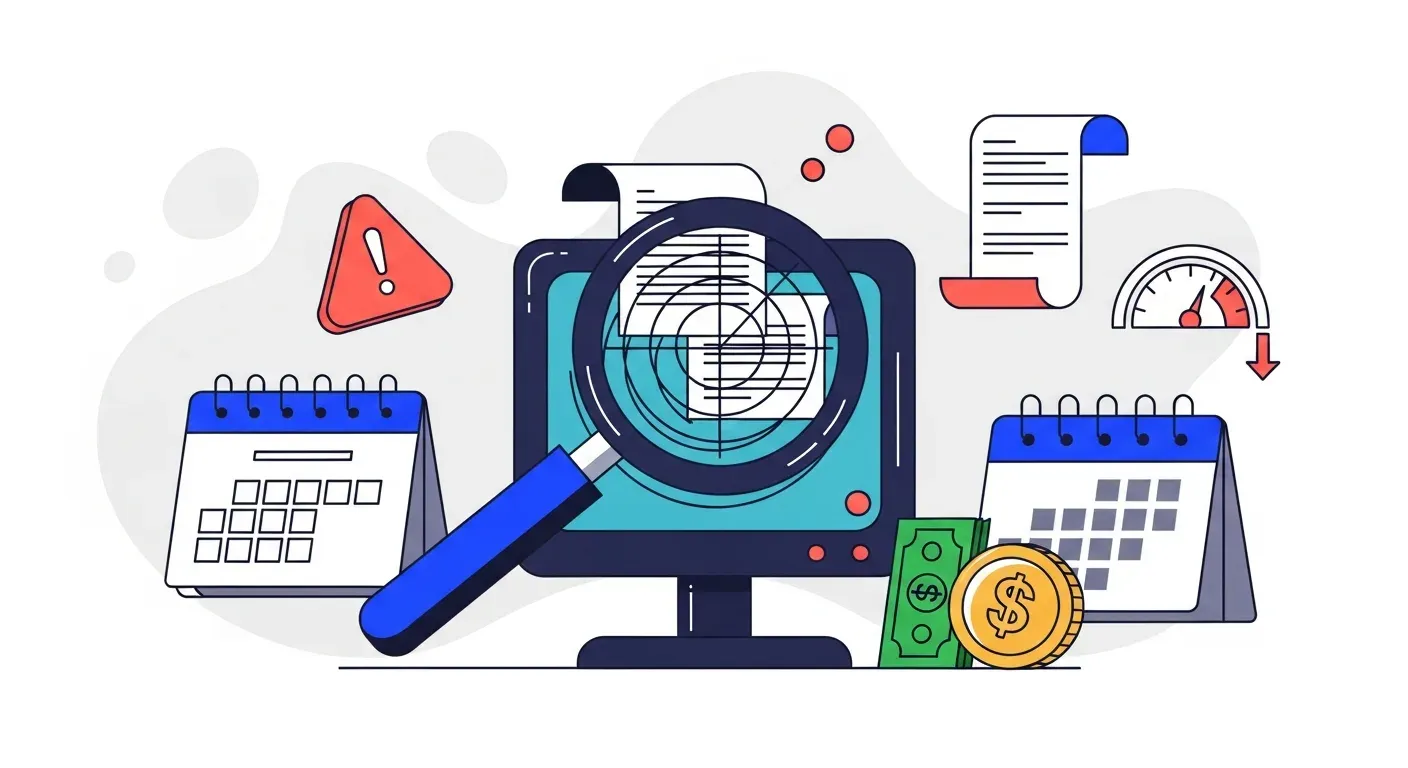




Yes, AI can predict late payments with meaningful accuracy by analyzing internal payment history, behavioral patterns, and external signals. Companies using predictive AR analytics report 20% to 35% improvements in on-time collection rates because they shift from reacting to overdue invoices to intervening before payments go past due. The most predictive signals come from your own AR data: changes in a customer's average days to pay, declining communication responsiveness, dispute frequency, and order pattern shifts. When combined with external financial indicators, these models give finance teams a prioritized view of which accounts need attention now, not after the invoice is already 30 days late.
Your finance team probably knows which customers are most likely to pay late. The customer who always stretches Net 30 to Net 45. The one who pays on time for six months, then suddenly goes quiet. The seasonal buyer whose cash flow tightens every Q4. This knowledge lives in your team's heads, built from experience and pattern recognition over years of managing those accounts.
The problem is that this knowledge does not scale. It does not transfer when someone leaves. It does not catch the new customer whose payment behavior mirrors a pattern your team saw three years ago with a different account. And it does not work proactively, because by the time a human recognizes the pattern, the invoice is usually already overdue.
AI changes that by turning the same pattern recognition into a systematic, real-time capability that works across your entire customer portfolio simultaneously.
What "predicting" late payments actually means
Prediction in this context is not about fortune-telling. It is about probability. AI models analyze historical payment data to assign a risk score to each customer or invoice, representing the likelihood that payment will arrive late. A customer with a 78% on-time payment rate, a stable payment velocity, and no recent disputes might score as low risk. A customer whose average days to pay has increased by 10 days over the past quarter, with two recent disputes and a declining order frequency, might score as elevated risk.
The practical value is not in knowing with certainty that invoice #4827 will be paid late. It is in knowing, at the time you issue that invoice, that this customer's recent behavior puts them in the top 15% of your accounts most likely to miss the due date. That shifts your response from reactive (waiting until the invoice is overdue, then following up) to proactive (adjusting your follow-up cadence, reaching out before the due date, or escalating the account for closer monitoring).
Probability, not certainty
No model predicts with 100% accuracy, and that is fine. The goal is to be meaningfully better than the alternative, which is treating all customers the same until they prove otherwise. If your AR team currently prioritizes overdue invoices by dollar value or aging bucket alone, even a 70% accurate prediction model dramatically improves how they allocate their time. Instead of chasing 50 overdue invoices with equal urgency, they focus on the 12 accounts that the model flagged as highest risk before the due date, and handle the rest with automated reminders.
The signals AI uses to predict payment behavior
AI models work by identifying which data points have historically correlated with late payment in your specific customer base. The signals fall into three categories.
Internal payment history
Your own AR data is the single most predictive source. The signals include:
Payment velocity trends. Not just whether a customer pays on time, but whether their average days to pay is stable, improving, or deteriorating. A customer who has paid in an average of 27 days for the past year is very different from a customer who averaged 27 days six months ago but now averages 34 days. The absolute number matters less than the direction.
Payment consistency. Some customers pay within a tight window every month. Others are erratic, paying in 20 days one month and 50 the next. High variability is itself a risk signal, even if the average falls within terms, because it indicates that the customer's ability or willingness to pay on schedule depends on factors you cannot see.
Dispute frequency. Customers who dispute invoices frequently are more likely to pay late, both because disputes directly delay payment and because frequent disputes may indicate dissatisfaction, pricing disagreements, or internal process problems at the customer that affect their AP workflow.
Partial payment patterns. A customer who starts making partial payments after a history of paying in full is signaling cash flow pressure. This shift often precedes a period of extended late payments.
Communication responsiveness. How quickly does the customer respond to invoice-related communications? A customer who used to reply within 24 hours but now takes a week to acknowledge a reminder is showing a behavioral change that often precedes payment delays.
External financial indicators
External data supplements your internal signals, especially for newer customers with limited payment history at your company.
Business credit scores. Declining scores from Dun & Bradstreet or Experian Business indicate broader financial stress, though these are lagging indicators that often confirm problems rather than predict them.
Industry conditions. Payment behavior correlates with industry cycles. If your customer operates in a sector experiencing contraction, their payment risk increases even if their individual history is clean. Construction, retail, and transportation are historically among the most cyclical sectors for B2B payment timing.
Public financial data. For larger customers, public filings, lien records, and legal judgments provide early warning signals. A new tax lien or a lawsuit from another vendor is information your AR team would want to know about but would never discover through manual monitoring.
Economic indicators. Regional economic conditions, interest rate changes, and sector-specific indices all influence payment behavior at the portfolio level. These macro signals are most useful for adjusting overall portfolio risk expectations rather than predicting individual account behavior.
Behavioral and transactional signals
Some of the most predictive signals are not financial at all. They come from changes in the customer's engagement pattern.
Order frequency changes. A customer who placed monthly orders for a year and then goes two months without ordering may be experiencing financial difficulty, shifting to a competitor, or simply going through a seasonal lull. Combined with other signals, declining order frequency adds predictive weight.
Order size changes. A customer who consistently orders $15,000 per month and suddenly places a $45,000 order may be stockpiling before a cash crunch. Or they may have landed a big project. The signal alone is ambiguous, but in combination with payment velocity trends and communication patterns, it adds context.
Contact pattern changes. When the primary AP contact changes, payment patterns often shift. The new person may have different processes, different approval timelines, or different prioritization of your invoices. This transition period is historically a higher-risk window for late payments.
How predictive models improve collections
The value of prediction is in the actions it enables. Knowing which accounts are at risk only matters if you can do something differently as a result.
Proactive follow-up before the due date
For accounts flagged as high risk, automated systems can start follow-up before the invoice is due. This is not aggressive early collection. It is a courtesy reminder, a payment confirmation request, or a check-in that serves a dual purpose: it keeps the invoice visible to the customer's AP team, and it provides a data point (did they respond? how quickly?) that updates the risk assessment in real time.
Companies that implement pre-due-date outreach for at-risk invoices typically see a 15% to 25% reduction in invoices that go past due, because many late payments are not caused by inability to pay but by the invoice falling through the cracks in the customer's process.
Tiered follow-up intensity
Without predictive scoring, most AR teams apply the same follow-up sequence to every overdue invoice. The same email at day 3, the same escalation at day 14, the same phone call at day 30. Predictive scoring enables tiered follow-up that matches intensity to risk.
Low-risk accounts (customers with strong payment histories who are slightly past due) get a light-touch automated reminder. They will almost certainly pay within a few days. Burning your team's time on a phone call adds no value.
Medium-risk accounts get a structured automated sequence across multiple channels (email, then SMS, then a call). The automation handles the mechanics while your team monitors for responses.
High-risk accounts get immediate human attention. Your most experienced collector calls the AP contact, negotiates if needed, and documents the outcome. These are the accounts where human judgment and relationship skills make the difference between getting paid and writing off the receivable.
This tiering means your team spends 80% of their time on the 20% of accounts that represent the most risk, rather than spreading effort evenly across a portfolio where most invoices will resolve themselves with a simple reminder.
Dynamic credit limit adjustments
Predictive analytics connects directly to credit management. A customer whose payment risk score is rising should not be accumulating more receivable exposure at the same credit limit. AI-powered systems can automatically flag accounts for credit review when risk scores cross defined thresholds, reducing your exposure before a default occurs rather than after.
This does not mean cutting off customers at the first sign of risk. It means having a conversation early. "We noticed your payment timeline has shifted over the past quarter. Is there anything we should discuss about terms?" is a very different conversation from "Your account is 60 days past due and we are considering collections."
Cash flow forecasting
When you know the probability distribution of payment timing across your portfolio, you can forecast cash inflows with much greater precision. Instead of assuming all invoices will pay within terms (which never happens) or applying a blanket DSO estimate, you can model expected cash receipts based on each customer's predicted payment behavior.
This improved forecasting helps with working capital management, line of credit utilization, and financial planning. Your CFO gets a more accurate picture of when cash will actually arrive, not when it is contractually due.
What you need to get started
Implementing predictive payment analytics does not require a data science team or a custom machine learning model. It requires data, a system that can analyze it, and a workflow that acts on the results.
Sufficient payment history
The models need historical data to learn from. A minimum of 6 to 12 months of invoice and payment data provides enough patterns for useful predictions. Companies with 2 or more years of history get more accurate models because the system has seen more seasonal cycles, economic conditions, and customer behavior patterns.
If you are starting with limited history, the model will be less accurate initially but will improve with each billing cycle as it processes new outcomes and refines its understanding of which signals predict late payment in your specific customer base.
Connected accounting data
Your accounting system is the primary data source. Connect your QuickBooks, Xero, NetSuite, Sage, or Odoo system so that invoice data, payment records, and customer information flow into the analytics layer automatically. Manual data preparation defeats the purpose. The system needs to pull clean, current data without human intervention to recalculate risk scores as new payments arrive and new invoices are issued.
Defined response workflows
Prediction without action is academic. Before you turn on predictive analytics, define what happens at each risk level. What follow-up cadence applies to high-risk accounts? Who gets notified when a customer's risk score changes? At what threshold do you escalate for human review? What automated actions (adjusted follow-up timing, pre-due-date reminders, credit hold triggers) fire based on risk scores?
These workflows turn predictions into measurable improvements in collection outcomes. Without them, you have a dashboard that tells you which customers are risky but no mechanism to do anything different about it.
Measuring predictive accuracy
Once you implement predictive analytics, track these metrics to evaluate whether the predictions are actually improving outcomes.
Prediction accuracy rate. Of the invoices flagged as high risk, what percentage actually went past due? Of those flagged as low risk, what percentage paid on time? Calculate both the true positive rate (correctly predicted late payments) and the false positive rate (flagged as risky but paid on time). A useful model should have a true positive rate above 70% and a false positive rate below 20%.
Time-to-action improvement. Compare the average number of days between invoice due date and first follow-up action before and after implementing predictive prioritization. If prediction is working, your team is engaging with at-risk accounts earlier, ideally before the due date rather than after.
DSO by risk tier. Track days sales outstanding separately for each risk tier. DSO for high-risk accounts should decline over time as proactive interventions prevent invoices from aging deeply. DSO for low-risk accounts should remain stable or improve slightly as automated reminders maintain payment discipline.
Collection effectiveness index. Measure the percentage of receivables collected within the original payment terms. This should increase as predictive prioritization ensures that the right accounts get attention at the right time.
Bad debt reduction. Over a 12-month period, compare write-offs before and after implementing predictive analytics. Companies using predictive AR report 25% to 40% reductions in bad debt write-offs because problems are identified and addressed earlier in the aging cycle.
The limits of prediction
New customers are harder to predict
Customers with no payment history at your company are inherently less predictable. The model relies on external data and industry benchmarks rather than direct behavioral observation. Prediction accuracy for first-time invoices to new customers typically runs 15% to 20% lower than for established accounts. The gap closes quickly as the customer establishes a payment pattern, usually within 3 to 4 billing cycles.
Sudden external shocks are unpredictable
A customer's largest client goes bankrupt. A natural disaster disrupts their supply chain. A regulatory change hits their industry. These events are not in the historical data and cannot be predicted by any model. What AI can do is detect the secondary effects quickly, the change in payment behavior, the shift in communication patterns, the declining order volume, and flag the account for review faster than manual monitoring would catch it.
Prediction does not replace relationships
The best collections teams combine data with relationships. A risk score tells you a customer is trending toward late payment. A phone conversation with their AP manager tells you that they just landed a major contract and will be back to normal within 60 days. Both pieces of information matter, and neither alone is sufficient.
Predictive analytics tells your team where to look. Human judgment tells them what to do about what they find. The combination is more effective than either approach alone.
From reactive to proactive collections
The fundamental shift that predictive analytics enables is moving from reactive to proactive collections. Most B2B finance teams today operate in reactive mode. They wait for invoices to go past due, then start chasing. The older the invoice gets, the harder they chase. By the time serious effort is applied, the invoice may be 30, 60, or 90 days overdue, and the probability of collection has dropped significantly.
Proactive collections, powered by predictive analytics, flips this sequence. The highest-intensity effort goes to accounts that are trending toward late payment, before the invoice is due. The result is that fewer invoices go past due in the first place, which reduces DSO, improves cash flow, and frees your team from the exhausting cycle of chasing aged receivables.
TDG Inc reduced manual follow-ups by 80% and cut DSO by 15 days within three months after connecting their accounting system to an automated AR platform that prioritizes accounts based on payment risk. Troyes went from fully manual to fully automated in a single day. In both cases, the ability to focus effort where it mattered most, rather than treating every invoice equally, drove the results.
Your AR data already contains the signals that predict which customers will pay late. The patterns are there in the payment timestamps, the dispute records, the communication logs, and the aging trends. You just need a system that reads those patterns continuously and turns them into actions your team can execute before problems become losses.
If your collections process is still reactive, waiting for invoices to age before responding, book a demo with Yonovo to see how AI-powered AR automation connected to QuickBooks, Xero, NetSuite, Sage, and Odoo gives your finance team predictive visibility into payment risk and turns late payment trends into early interventions.
Frequently Asked Questions
How accurate are AI late payment predictions?
Accuracy depends on the volume and quality of historical data, but B2B companies with 12 or more months of transaction history typically see prediction accuracy between 70% and 85% for identifying invoices at risk of going 15 or more days past due. The models improve over time as they process more outcomes and learn which signals are most predictive for your specific customer base. Accuracy is highest for repeat customers with established payment patterns and lower for new customers with limited history, where the model relies more on external data and industry benchmarks.
What data does AI need to predict late payments?
The most valuable data is your own accounts receivable history: payment dates versus due dates for every invoice, dispute records, partial payment frequency, communication response times, and order patterns. External data sources add predictive power, including business credit scores, public financial filings, industry risk indicators, and economic conditions in the customer's sector or region. Most AR automation platforms can pull this data automatically from your accounting system (QuickBooks, Xero, NetSuite, Sage, Odoo) without requiring manual data preparation.
How far in advance can AI predict a late payment?
For repeat customers with established patterns, AI can flag elevated risk at the time the invoice is issued, before the due date arrives. The signals that predict late payment (slowing payment velocity, reduced communication responsiveness, increased dispute activity) often appear weeks or months before a specific invoice goes past due. For pattern shifts like a customer's average days to pay increasing from 28 to 38 over three months, the model flags the trend while individual invoices are still current, giving your team time to intervene proactively.
Is predictive AR analytics only useful for large companies?
No. Companies processing as few as 50 to 100 invoices per month can benefit from predictive analytics, because even a small portfolio contains patterns that human review misses. A finance team managing 200 customer accounts cannot mentally track which customers are trending slower, which industries are under stress, or which accounts show the combination of signals that historically precede a late payment. AI surfaces these patterns regardless of company size. The key requirement is not company size but data history, specifically at least 6 to 12 months of invoice and payment records.
Will predictive analytics replace my collections team?
No. Predictive analytics changes what your collections team works on, not whether you need them. Instead of spending time chasing every overdue invoice equally, your team focuses their effort on the accounts that AI identifies as highest risk or highest value. The routine follow-ups (timely reminders for customers who just need a nudge) get handled automatically, while your experienced collectors handle the accounts that need human judgment: negotiating payment plans, managing disputes, and maintaining relationships with strategically important customers.